


1. Introduction
2. Literature Review
3. Analysis of Barriers and Strategies for Improving BIM Adoption in Developing Countries
3.1 Barriers to BIM Adoption in Developing Countries
3.2 Strategies for Improving BIM Adoption
3.3 Composing a Code Table of Barriers and Strategic Factors for BIM Application for Developing Countries
4. Method for Analyzing the Current Status of BIM Application
4.1 A Systematic Review of Literature on BIM Adoption: Barriers and Strategic Interventions
4.2 Questionnaire Survey to Analyze the Status of BIM in Myanmar
4.3. Data Collection
4.4. Data Analysis
5. Results and Discussion of Questionnaire Survey
5.1. Demographic Information of Survey Respondents
5.2. Current Practices and General Attitude towards BIM Adoption
5.3 Statistical Validation of Barriers and Strategies Rankings
5.4 Ranking Barriers and Strategies of BIM Implementation
5.5 Discussion
6. Conclusions
1. Introduction
Building Information Modeling (BIM) has emerged a transformative force within the Architecture, Engineering, and Construction (AEC) industry, revolutionizing project management and collaboration processes (Pinnacle Infotech (2024). This innovative approach is more than just all about technological evolution. This is a paradigm shift in how construction projects are planned, designed, and executed. BIM integrates all aspects, disciplines, and systems of a facility into a single model, enabling stakeholders, including clients, owners, architects, engineers, and contractors, to collaborate with unprecedented accuracy and efficiency compared to traditional methods (Succar, 2009; Azhar et al., 2015; Succar & Kassem, 2015). Therefore, BIM has become more popular in the worldwide AEC industry in recent years (NBS, 2020). Research on BIM implementation across the United States, United Kingdom, Germany, and France indicated a significant increase in high-level users, with percentages climbing from 20% to 52% in 2015 - 2017 (Juan et al., 2016). Moreover, (Eastman et al., 2018) reported that between 2007 and 2017, several countries and regions, including Norway, Denmark, Finland, the US, South Korea, Singapore, the UK, Dubai, Italy, and France, progressively implemented mandatory BIM policies. Therefore, it is possible to argue that BIM will be essential to the AEC sector going forward (Ma et al., 2023).
Numerous studies, articles, books, and construction industry surveys have reported the general benefits, barriers, and limitations of BIM adoption throughout the lifecycle of various constructions worldwide (Arayici et al., 2011; Azhar et al., 2015; Hosseini et al., 2015). However, many studies on BIM implementation pertain to the construction operating environments of developed countries, with limited consideration of the contextual issues in developing countries. The issues associated with BIM adoption in developed nations may be uniform due to comparable implementation standards, research and development investments, expertise levels, and operational contexts (Mbachu et al., 2017). In contrast, the obstacles faced by developing countries are diverse, necessitating individual examination of these issues through a sufficient number of case studies.
This study contributes to narrowing the research gap by exploring BIM issues and ways to improve its adoption in Myanmar. Ismail et al. (2017) revealed that the information on BIM growth in Myanmar is limited. Although Myanmar does not widely use BIM, most practitioners are involved in Singapore's BIM sector. There is no mandate by the government to use BIM in the construction industry; hence, companies and stakeholders are hesitant to adopt BIM applications. BIM specialists have launched various seminars, trainings, and online resources since 2012, mainly through private initiatives. They believed BIM adoption would become broader and faster if the government could support it. Implementing BIM barriers are the factors that disturb the successful application of BIM in a construction project.
The study aims to:
1. Identify and rank the critical barriers to BIM adoption in Myanmar’s construction industry
2. Examine and prioritize the most effective strategies for accelerating BIM implementation.
To achieve these objectives, the following research questions are addressed:
1. What are the major barriers to BIM adoption in Myanmar’s construction industry?
2. What strategies can accelerate BIM implementation in developing countries like Myanmar?
To answer these questions, a systematic approach of reviewing the literature on BIM barriers and proposed strategies for successful BIM implementation, as well as adopting a questionnaire survey of construction professionals in Myanmar to assess the criticality of the barriers and strategies. The data were analyzed using standard descriptive statistics and the Relative Importance Index (RII) for ranking. The results and target recommendations can promote BIM adoption in the country.
2. Literature Review
The construction sector has undergone a transformation with the application of BIM, which offers advantages including cost reductions, on-time project delivery, and enhanced quality. HM Government (2012), Wong et al. (2009), and BuildingSMART (2012) addressed that several governments, including those of the UK, USA, and Australia, have established strategies to promote BIM adoption. For instance, Efficiency and Reform Group (2011), the UK implemented a BIM roadmap in 2011, and Australia mandated BIM for public projects starting in 2016 (BuildingSMART, 2012). In Iceland, a study by Kjartansdottir (2011) reported that 40% of professionals, particularly architects and engineers, use BIM in their practices. BIPS (2012) reported that Denmark and Norway mandated BIM for public projects as early as 2007, while the USA saw BIM adoption grow from 28% to 48% between 2007 and 2009, with 82% of users reporting increased productivity (McGraw-Hill, 2008; Eadie et al., 2015).
Lee et al. (2014) stated that the USA's General Services Administration incorporated BIM requirements in 2006, leading to a rise in adoption from 28% to 71% between 2007 and 2012. Similarly, the UK aims to lead Europe in BIM adoption, with contractors and architects reaching adoption levels of 74% and 70%, respectively (Matarneh & Hamed, 2017). According to (Singh, 2017), Finland started BIM implementation in 2002, requiring IFC-certified designs by 2007. Norway and Denmark mandated BIM usage in 2010, while Sweden adopted BIM widely without government compulsion. Singapore mandated BIM for large projects and provided funding for training and software. France resolved to use BIM for 500 housing projects by 2017, and South Korea mandated BIM for government projects over $50 million in 2016 (Ji & Turkan, 2021). Developed countries with high incomes have taken early and bold steps, including mandating the government to implement BIM and establishing strategies and guidelines to increase BIM implementation. However, the countries in the Middle East, including Saudi Arabia, Kuwait, Oma, and the UAE, are still reluctant to implement BIM (Gerges et al., 2017).
In contrast, China and India also strive to adopt BIM by making serious efforts with higher interest (Ahuja et al., 2016), (Tai et al., 2021). Similarly, Malaysia has demonstrated a significant number of initiatives and government-mandated BIM use for public projects above MYR100m (Othman et al., 2021). Nevertheless, even with these initiatives and interest, the adoption of BIM in these countries was described as low (Othman et al., 2021; Liao & Teo, 2017). Comparatively, the development of BIM in developing countries such as Nigeria and Pakistan is low due to many factors that hinder the adoption (Babatunde et al., 2021), (Masood et al., 2014). (Saghatforoush et al., 2021) stated that the initial costs associated with BIM, such as software, hardware, and consultancy expenses, create apprehension about implementing BIM. In the early stages, however, implementation of BIM may result in productivity decline because there is a long learning curve so that near term improvements are less evident (Eastman et al., 2018). In addition to the financial and learning challenges, BIM also has complex data-sharing requirements, which in turn raises some concerns regarding legal and contractual frameworks. It was observed that BIM projects lack strict guidelines that can help avoid issues like data exchange errors and intellectual property disputes (Ayinla & Adamu, 2018).
Wu et al. (2021) mentioned that processes to implement BIM technology face numerous barriers that impede its wider application on construction sites. BIM is substantially more complex to adopt and implement. Viewed as a modern phenomenon that is very often disruptive to the methods that the built profession and traditionally constructed industry used to do their work. "Traditional design and construction management technologies cannot provide the accuracy necessary for the growing complexity of modern structures" (Alemayehu et al., 2022). The construction industry has focused on BIM for decades, while several research studies have investigated barriers to BIM acceptance and implementation. This indicates that the industry wants to quickly change the current practices.
Moreover, previous studies on BIM implementation also suggest that incentives from the government could accelerate BIM adoption and diffusion (Marzouk et al., 2022). Unfortunately, there has not been a push from the government in developing countries such as India, Egypt, and Nigeria to mandate BIM in public projects (Marzouk et al., 2022; Olanrewaju et al., 2020).
Additionally, the lack of BIM knowledge and uncertainty about the financial implications have been noted as key barriers to BIM implementation by (Silverio et al., 2023) and (Wang & Lu, 2022). The importance of addressing these factors to avoid failures in implementing BIM has been highlighted in the literature. Much research has made significant contributions by proposing strategies for implementing BIM at different levels (e.g., government, organization, and education) and realizing the importance of addressing these factors.
3. Analysis of Barriers and Strategies for Improving BIM Adoption in Developing Countries
The literature on BIM implementation in developing countries is divided into two categories: barriers to BIM implementation and strategies for BIM implementation.
3.1 Barriers to BIM Adoption in Developing Countries
Many studies have identified barriers to BIM implementation in developing countries. The top six barriers in AEC firms in Nigeria are the low level of BIM technical know-how and awareness, the inaccessibility to suitable technology and framework, the vast capital outlays for initial BIM, the absence of BIM guidelines, the lack of senior management, and the lack of an enabling environment (Babatunde et al., 2021). Furthermore, other studies found that a lack of BIM awareness, unfamiliarity with BIM capacity, absence of government support, and resistance to change from the traditional workflow are hindering its adoption (Olanrewaju et al., 2020; Toyin & Mewomo, 2023).
Belay et al. (2021) revealed inadequate IT infrastructure, lack of government support, and lack of BIM-related research and courses in university curricula in Ethiopian public construction projects. Moreover, there is a lack of BIM professionals, proper BIM training is unavailable, stakeholders are not BIM-ready, BIM guidelines and standards are lacking, and supportive delivery methods are absent in the Ethiopian construction industry (Alemayehu et al., 2022).
The lack of education and training and lack of standards for the modeling projects primarily due to funding shortages in education and industry, low incentives, copyright issues, and an unwillingness to accept changes in using new software within the construction industry are the significant barriers to BIM adoption in Malaysia (Wong et al., 2009). Fasasia (2024) revealed that resistance to change, traditional construction methods, workflow changes, lack of top management support, and undervaluing BIM were the top five challenges to BIM adoption in the United Arab Emirates (UAE) construction industry.
Mishra et al. (2024) examined the barriers to BIM implementation in India, assessing the pre- and post-adoption phases. The study identified several significant challenges within the Indian construction industry, including the high costs associated with hardware and software, limited adoption across the supply chain, insufficient market support, unclear evaluations of benefits, a shortfall in skills and expertise, a lack of understanding among clients, and user resistance. These factors collectively pose significant obstacles to successfully integrating BIM within the sector.
Lack of organizational efforts in BIM adoption, weak Pakistan Engineering Council (PEC), and government efforts to frame BIM regulations and standards are the main barriers in Pakistan's construction market (Syed, 2020). In the Iraqi construction sector, the three significant barriers to implementing BIM are the weakness of the government's efforts, poor knowledge about the benefits of BIM, and resistance to change (Hatem et al., 2018).
Bagcal et al. (2019) highlighted that the high cost of BIM-related software, lack of skilled BIM experts, and satisfaction with the current use of software (CAD) are considered the main reasons that could prevent BIM implementation in the Philippine construction industry. In the Cambodian construction industry, resistance to change, especially reluctance to change from traditional 2D drafting to 3D modeling, the high initial cost of the software, and the shortage of skilled BIM professionals were the significant obstacles to BIM implementation (Durdyev et al., 2021). El Hajj et al. (2021) identified the main potential barriers to BIM adoption in the Middle East and North Africa (MENA) developing countries' construction industries are a lack of knowledge and BIM awareness, commercial issues and investment costs, lack of skills, and a lack of BIM specialists. Another study discussed the key barriers to BIM adoption in Jordanian AEC companies, highlighting the cost of training and BIM software, insufficient BIM technical knowledge and awareness, lack of adequate BIM guidelines, and huge BIM up-frontal investment (Hyarat et al., 2022).
Van Tam et al. (2024) found that social and habitual resistance to change, high costs of software and hardware, lack of market data for technology integration, security concerns, and the absence of standardized practices and guidelines are the most significant barriers to construction digitalization in Vietnam. Alhumayn et al. (2017) study showed that the adoption of BIM has steadily increased in Saudi Arabia in recent years. However, the lack of knowledge about BIM, the lack of support from managers to accept changing current practices, the lack of practical standards and guidelines, and the lack of attention by policymakers and the government still hindered the adoption of BIM in the Saudi Arabia construction industry.
Attia & Arandah (2020) identified the challenges of BIM implementation to overcome the sustainable construction industry in Egypt: lack of support and incentives from construction policymakers, High adoption costs, lack of standards and codes, and lack of awareness about BIM. (Zhou et al., 2019), highlighted the six significant barriers to BIM implementation in China: inadequate government leadership, organizational issues, legal issues, high cost of application, resistance to changing the current mode, and insufficient external motivation.
According to the existing literature on barriers to BIM implementation, 28 barriers to BIM adoption in the construction industry were selected. These barriers have been categorized into five main groups: human resource, technical, legal, economic, and managerial barriers. Table 1 depicts the barriers to BIM implementation from different studies and their origin. This classification helps to analyze the barriers systematically and supports the development of focused and effective strategies for improving BIM implementation.
Table 1.
List of BIM implementation barriers
| Barrier code | Barriers | References | |
| B.1 Human resources barriers | B.1.1 | Cultural challenges and resistance to change | (Arayici et al., 2011), (Chan et al., 2019) |
| B.1.2 | Inadequate training on the use of BIM | (Rogers et al., 2015), (Bui et al., 2016), (Gerges et al., 2017) | |
| B.1.3 | Lack of skilled BIM Professionals | (Zahrizan et al., 2013), (McAuley et al., 2017) | |
| B.1.4 | Lack of BIM awareness and understanding | (Zahrizan et al., 2013), (Chan et al., 2019) | |
| B.1.5 | Lack of vision of BIM benefits | (Gerges et al., 2017) | |
| B.1.6 | Inadequate BIM project experience | (Chien et al., 2014) | |
| B.2 Technical barriers | B.2.1 | Interoperability issues between different software programs | (Chien et al., 2014), (Ahmad et al., 2018) |
| B.2.2 | Inaccessibility to suitable technology and framework | (Zahrizan et al., 2013), (Ezeokoli et al., 2016) | |
| B.2.3 | Frequent power failure | (Abubakar et al., 2014) | |
| B.2.4 | Low-quality building design | (Bui et al., 2016) | |
| B.2.5 | Longer process to develop the BIM model | (Ismail et al., 2017) | |
| B.2.6 | Poor Internet connectivity | (Babatunde & Ekundayo, 2019) | |
| B.3 Legal barriers | B.3.1 | Legal constraints in sharing data and data ownership | (Bui et al., 2016), (Oteng et al., 2018) |
| B.3.2 | Lack of BIM standards, and framework | (McAuley et al., 2017), (Chan et al., 2019) | |
| B.3.3 | Lack of support from the government | (Eadie et al., 2015), (Rogers et al., 2015) | |
| B.3.4 | Absence of appropriate BIM guideline |
(Abubakar et al., 2014), (Babatunde & Ekundayo, 2019) | |
| B.3.5 | Inadequate government policies and legislation |
(Abubakar et al., 2014), (Babatunde & Ekundayo, 2019) | |
| B.3.6 | Low acceptance of BIM in the local market and industry | (Rogers et al., 2015) | |
| B.3.7 | Absence of mandatory requirements from the government | (Rogers et al., 2015) | |
| B.4 Economic barriers | B.4.1 | High initial cost of Software and Hardware | (Eadie et al., 2015), (Gerges et al., 2017), (Chan et al., 2019) |
| B.4.2 | High cost of training | (Eadie et al., 2015), (Oteng et al., 2018) | |
| B.4.3 | Doubts about Return on Investment (ROI) | (Ahmad et al., 2018) | |
| B.4.4 | Lack of client's understanding of BIM | (McAuley et al., 2017) | |
| B.4.5 | Lack of client's demand for BIM | (Wang et al., 2015) | |
| B.4.6 | Inadequate market support and lack of suitable BIM projects | (Gerges et al., 2017) | |
| B.5 Managerial barriers | B.5.1 | Low engagement across supply chain buy-in | (Eadie et al., 2015) |
| B.5.2 | Lack of collaborative procurement methods | (Abubakar et al., 2014) | |
| B.5.3 | Limited involvement from professional bodies and industry clusters | (Bui et al., 2016) | |
3.2 Strategies for Improving BIM Adoption
Earlier studies emphasized particular suggestions that can help tackle the difficulties of implementing BIM in developing nations, including creating targeted strategies to consider the unique circumstances of these countries. (Walasek & Barszcz, 2017) suggested that a new communication strategy is needed once adoption rates increase. This strategy should focus less on scarcity and more on social proof to accelerate adoption. Furthermore, Hamma-adama & Kouider (2019) recommended mandating BIM usage to help speed up adoption and lessen education and training challenges. The study also suggested that various diffusion dynamics be used to assist with the process. The implementation of BIM could be improved by raising awareness of its advantages; a conducive atmosphere can lead to the needed change in the stakeholders' perception. Furthermore, Matarneh & Hamed (2017) mentioned that industry practitioners and academic organizations should work hand in hand to formulate a program that fits smoothly with the industry practices and processes.
Bui et al. (2016) suggested that the best way to promote the use of BIM and increase the rate of technological updating in developing countries would be through the support of these countries' governments. It has worked in Norway, too, where many large clients have mandated open BIM for all or most of their projects. Finally, providing BIM knowledge to AEC firms in developing countries will help disseminate and encourage them to adopt BIM methods. Doing so would contribute to a more extensive understanding of the advantages of BIM and
improve the technical skillset required for its implementation. According to (Smith, 2014), coordination of government support and leadership was identified as one of the topmost critical strategies for BIM implementation. Development of local and worldwide standards for BIM, legal regulations to address liability concerns, BIM certification, education and training, and justifying the business case for BIM adoption were also cited as other crucial strategies.
Since governments are the most benefited clients from BIM implementation, governments have actively promoted BIM applications using different policies and initiatives. These various strategies can be categorized into three main approaches: a government-driven approach, an industry- driven approach, and a mixed approach. The government- driven approach is based on issuing policies or mandates that push the industry to adopt BIM applications.
Hadzaman et al. (2015) used the strategic analysis elements, including capacity, support, and value in the present Malaysia BIM roadmap pillars (i.e., standards and accreditation, collaboration and incentives education and awareness, national BIM library, BIM guidelines, special interest group (SIG); research and development (R&D) based on Australia, Singapore, and Hong Kong findings as lessons learned.
Proposed strategies derived from prior studies are summarized in Table 2. These diverse strategies fall into five categories: education and training, technology and infrastructure, government sector, cost and investment, and organization and support.
Table 2.
List of strategies for BIM implementation
| Strategies Code | Strategies | References | |
| S.1 Education and Training | S.1.1 | Incorporation of BIM into the academic curriculum | (Ezeokoli et al., 2016) |
| S.1.2 | Providing BIM and related IT training by employers | (Isa, 2015), (Ma et al., 2023) | |
| S.1.3 | Offering more BIM training time and opportunities | (Alufohai, 2012), (Ma et al., 2023) | |
| S.1.4 | Improving BIM awareness and understanding in the construction field | (Isa, 2015), (Ma et al., 2023) | |
| S.2 Technology and Infrastructure | S.2.1 | Provision of appropriate technology and infrastructure | (Ezeokoli et al., 2016) |
| S.2.2 | Improving the complexity and integration of the BIM platform | (Ma et al., 2023) | |
| S.2.3 | Strengthen BIM system maintenance for data security | (Ma et al., 2023) | |
| S.3 Government Sector | S.3.1 | Government support for the use of BIM | (Isa, 2015) |
| S.3.2 | Developing BIM guidelines | (Isa, 2015), (Ezeokoli et al., 2016) | |
| S.3.3 | Mandate BIM for Public Investment Projects | (Ezeokoli et al., 2016), (Ma et al., 2023) | |
| S.4 Cost and Investment | S.4.1 | Publishing policies to provide financial or legal support | (Isa, 2015), (Ma et al., 2023) |
| S.4.2 | Increasing investment in hardware and software | (Ma et al., 2023) | |
| S.4.3 | Increasing investment in BIM training | (Ma et al., 2023) | |
| S.5 Organizational Support | S.5.1 | Outsourcing BIM experts | (Isa, 2015) |
| S.5.2 | Setting up a BIM council | (Ezeokoli et al., 2016) | |
| S.5.3 | Removing the barriers between companies and individuals | (Ma et al., 2023) | |
Sections 3.1 and 3.2 delineate the obstacles to the adoption of BIM and propose strategies with the relevant codes for enhancing its implementation, as derived from a comprehensive literature review. The codes established in these sections are subsequently employed in Section 4 to inform the development of a survey instrument. This instrument is designed to examine the applicability of both the identified barriers and strategies within the specific context of Myanmar.
3.3 Composing a Code Table of Barriers and Strategic Factors for BIM Application for Developing Countries
Figure 1 demonstrates that creating a framework in the shape of barriers matched with techniques for BIM implementation allows addressing BIM technology acceptance in a more structural approach. The table usually lists typical challenges that organizations encounter while adopting BIM and the strategies deployed to address them. Identifying specific obstacles and their suggested remedies will help organizations in their particular BIM implementation plan. Here are some examples of barrier-strategy pairs:
Lack of skilled BIM professionals: This barrier arises from the lack of employees who have sufficient skills to use BIM software and integrate it into existing workflows. In line with that strategy, employers must conduct extensive training, educate and hire for BIM capabilities. The programs must involve both the technical side of using BIM software as well as a broader understanding of BIM implementation, which could include in-house training sessions, external courses and mentorship programs, including those available in universities. This is where outsourcing comes into play, as it enables organizations to bridge the skill gap by hiring professional BIM experts who can hit the ground running without needing business-specific training. These methods allow construction companies to enrich their BIM knowledge by leveraging external expertise without compromising project delivery quality or burdensomely tasking either party to complete a given project.
High initial costs: Many organizations may be discouraged by the costly initial costs of BIM implementation, such as software licenses, hardware upgrades, and training expenses. Utilizing a phased implementation approach enables organizations to break up workflows and widespread costs into a period of time, which allows for more gradual implementation of BIM into just about any architecture, engineering, or construction firm. Moreover, a comprehensive cost-benefit analysis not only provides stakeholders with a clear picture of the immediate costs associated with BIM implementation but also highlights the long-term benefits such as increased efficiency, diminished errors, and improved project outcomes that can validate the upfront investment.
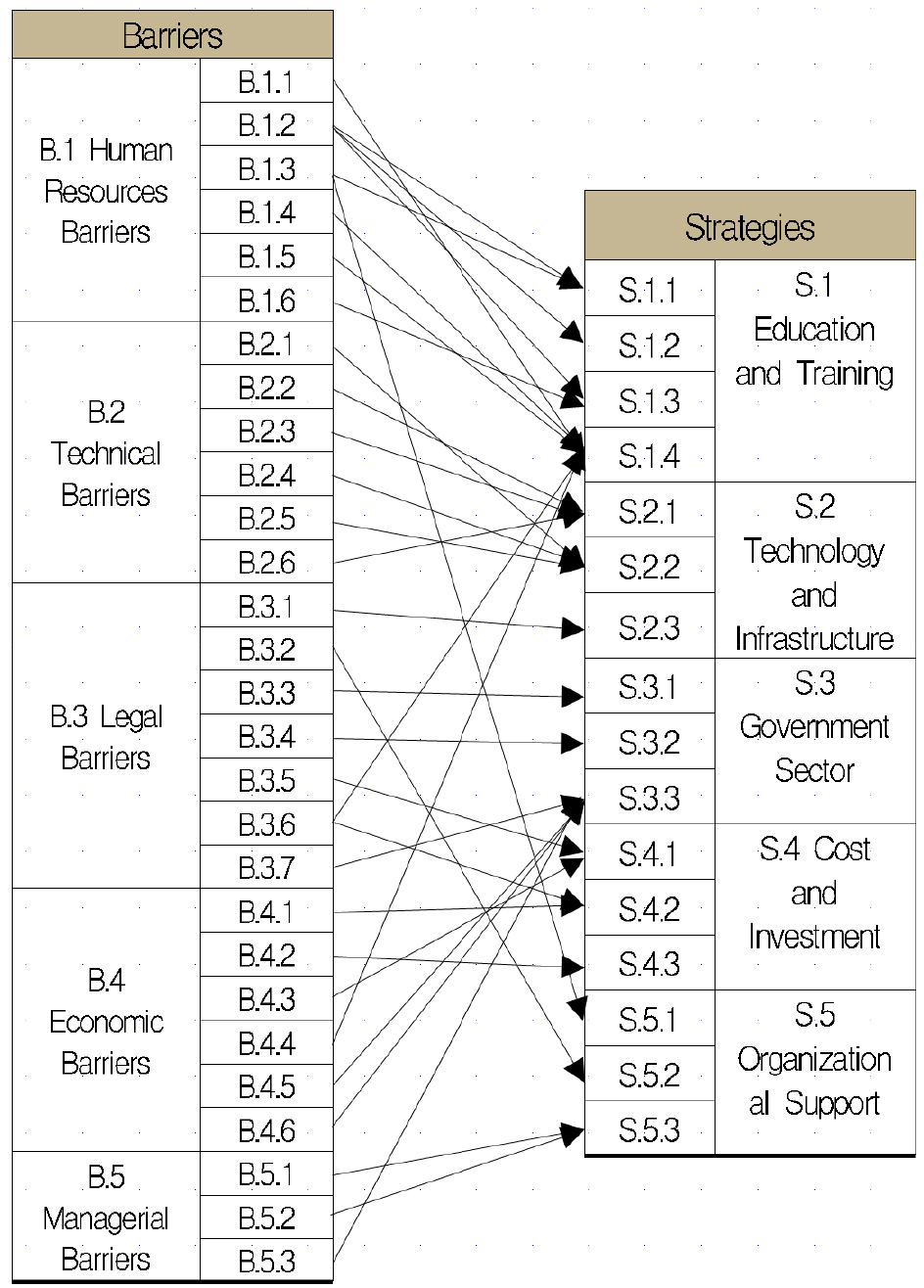
Interoperability issues between software programs: The failure of different software programs to work together and exchange data seamlessly leads to inefficiencies and loss of data. To help with that barrier, organizations need to focus on standardization and open data formats. Some initiatives can include pushing for widespread adoption of BIM and open data formats (Industry Foundation Classes (IFC) are a well-known advanced format), BIM is also leading to standardized processes for data sharing, middleware for converting data into cam be an area of interest.
4. Method for Analyzing the Current Status of BIM Application
This section illustrates the methodology used in this study to investigate potential barriers and strategies for BIM implementation in Myanmar. This study adopted a quantitative approach that involved three stages: a comprehensive literature review, questionnaire design, and data collection.
4.1 A Systematic Review of Literature on BIM Adoption: Barriers and Strategic Interventions
A systematic literature review was performed to determine the various barriers impacting BIM adoption and measures to fast-track BIM implementation in the construction sectors of developing nations. This study is based on selecting existing study resources (such as Google Scholar and Scopus) to search the subject area comprehensively. We used a combination of the most relevant keywords for the extraction of studies like "Building Information Modeling" or "BIM,” "Barriers,” "Strategies,” "Adoption," and "Implementation" from the title, abstract, or keyword sections and limited from 2013 to 2024. The initial steps of the studies were reviewed for the removal of duplicate studies, selection of target papers, and a more visual and comprehensive search within these publications. The final selection of the contents of these publications was reviewed. The outcomes of the extensive literature review revealed 28 barriers that hinder BIM adoption and 16 strategies for improving BIM implementation in the construction industry.
4.2 Questionnaire Survey to Analyze the Status of BIM in Myanmar
Barriers and strategies of BIM implementation research have been predominantly conducted through a questionnaire survey because it is an effective tool to gauge experts' perceptions, and the information resulting from the questionnaire can be used to reveal correlations in their perceptions (Spector, 1994; Lee et al., 2015; Babatunde et al., 2018; Jin et al., 2019; Zou et al., 2019). Therefore, a ranking-style questionnaire survey was designed to collect data for this study. This study adopted a quantitative approach to create a closed-ended questionnaire with a five-point Likert scale ranging from least severity to highest severity to evaluate the perceived barriers to and strategies for BIM implementation. Before the administration of a survey, a pilot survey of the questionnaire comprised five experts on BIM to discover the problems and identify the more ambiguous questionnaires than others (Salkind, 2010). A final questionnaire survey was conducted using feedback from the pilot survey. The questionnaire comprised three sections: (1) the background of the respondents, (2) current practices and general attitude towards BIM adoption, and (3) a ranking of barriers to and strategies for accelerating BIM implementation.
4.3. Data Collection
The survey was administered to a sample of construction professionals, including project managers, architects, engineers, owners, and BIM professionals with experience working in the construction industry in Myanmar. The purposive sampling technique (Campbell et al., 2020) was used to ensure that representatives from different roles in the construction industry were included. These were among the questions used in the survey to ascertain perspectives on construction digitalization and recognize perceived barriers. Participants were chosen due to their experience in the construction industry and participation in BIM implementation. A total of 110 questionnaire surveys were distributed to the target respondents who have been engaged in BIM projects via a purposive sampling technique. The questionnaire survey was returned with 56 complete and valid questionnaires after a month, representing an effective response rate of 51%. The sample size of this study (56 responses) was considered satisfactory and adequate for various types of statistical analysis conducted when compared with other studies that have utilized similar purposive sampling techniques, e.g., (Ameyaw and Chan, 2015) with 40 responses; (Osei-Kyei & Chan, 2017) with 42 responses; (Chan et al., 2011) with 45 responses. So, the sample chosen was regarded as reliable and substantially representative of the survey population.
4.4. Data Analysis
Data analysis is a process of extracting significant facts and details or seeking an interpretation of raw statistical data in its vague form (Olatunji et al., 2017). The study utilized quantitative data analysis tools to analyze the data gathered from the questionnaire survey using standard statistical analysis methodology. This analysis was conducted using the Cronbach Alpha reliability test, Relative Importance Index (RII), and quantitative descriptive statistics like mean and standard deviation through the combination of Statistical Package for Social Sciences (SPSS 30) and Microsoft Excel Spreadsheets. Descriptive statistics are statistical techniques that summarize, organize, and simplify data. As the central tendency of the statistic from the concept of representative value (the mean), which aims to describe the distribution of values, is the best single value, one of the most important measures of central tendency is the mean. Variability measures are numerical measurements that reflect differences between values in distribution and demonstrate the degree to which the data is concentrated or dispersed. One of the most critical measures of variability is the standard deviation (SD) (Gravetter & Wallnau, 2017).
4.4.1. Reliability test
Cronbach’s alpha is one of the most common methods used to verify the internal consistency or reliability of the constructed questionnaire items under the adopted Likert scale of measurement (Santos, 1999; Olatunji et al., 2017). It has a valuate range where 1.0 is the highest value attainable. The closer the value is to 1.0, the higher the relationship between the test items (Vanderstoep & Johnston 2009). According to Mane and Nagesha (2014) and Chan et al. (2019), the larger α-value reflects increased reliability of the resulting scale and measurements. It stated that if the α-value is 0.7, the measurement scale is reliable. A Cronbach's alpha value is greater than or equal to 0.7, which shows relatively good internal reliability for the scale. The results indicate an α-value of the barriers to BIM implementation components is 0.97 and the strategies for BIM implementation component is 0.973 at the 5% significant level. Therefore, as Cronbach’s alpha coefficient of all the variables (barriers and strategies) were greater than 0.7, as Pallant (2005) indicated that all items had high internal consistency and reliability.
4.4.2. Relative Importance Index (RII)
Relative importance index RII is one of the techniques used in data analysis, which can determine the ranking of each item in a specific section of the questionnaire. Barriers to BIM implementation and strategies to enhance its adoption were ranked in the ascending order of their respective RII values using the following formula from the five-point Likert scale employed in the questionnaire (Jarkas & Bitar, 2012).
W = Weight assigned by respondents to each component (ranging from 1 to 5)
A = Highest possible weight (i.e., 5)
N = Total number of respondents
4.4.3. Independent Samples t-test
The independent samples t-test was employed to examine whether there was a significant difference in the mean RII values between the top five and bottom five ranked sub-barriers and strategies. This test is appropriate when comparing two independent groups under the assumption that the data are approximately normally distributed and the variances are not equal (Field, 2018).
where:
x̄1, x̄2 = the sample means of each group
s1, s2 = the standard deviations
n1, n2 = the sample size
A statistically significant result (p < .05) indicates that the mean importance ratings differ between the groups.
4.4.4. Mann-Whitney U Test
Given that RII scores are derived from ordinal Likert-scale data, the Mann-Whitney U test was also applied as a non-parametric alternative to validate the results without assuming normality (Pallant, 2020). This test ranks all values and compares the rank sums between two independent groups.
The U statistic is calculated as:
Where:
R1 = the sum of the ranks for Group 1
n1,n2 = the sample sizes of the two groups.
The smaller U value is compared against the critical U value, or a p-value is derived. A significant result (p < .05) supports the claim that the two groups differ in distribution.
5. Results and Discussion of Questionnaire Survey
This section presents data collected from the questionnaire survey and discusses the results of this study.
5.1. Demographic Information of Survey Respondents
Respondents' backgrounds are listed in Table 3 encompass different groups of construction industry professionals, including owners, engineers (civil, MEP), project managers, and BIM professionals with various years of experience and affiliation with different organizations. The majority (79%) had a bachelor's degree, followed by a master's degree (16%), a doctoral degree (2%), and a diploma degree (2%), respectively. The survey data were collected from 56 professionals representing firms primarily engaged in building construction projects within urban areas of Myanmar. While this sample reflects insights from embedded stakeholders in active BIM-related projects, it is acknowledged it lacks the wider diversity of the construction sector in the country with particular reference to rural projects or smaller contractors.
Table 3.
Respondent’s background information
5.2. Current Practices and General Attitude towards BIM Adoption
To obtain a comprehensive view of the respondents' perspectives, they were asked several questions related to understanding the current status of BIM and the extent of the knowledge available on it.
Figure 2 shows the percentage levels of familiarity with BIM software among a group of respondents. The percentage of respondents "Somewhat familiar" was 38%, "Familiar" was 35%, "Very Familiar" was 21%, and "Not Familiar" was 7%. More than half of the respondents (55%) were at least familiar with BIM software, indicating that BIM awareness is increasing in the relevant industries. This result may be a positive point in facilitating the adoption of BIM because the majority have experience and preprocessing with BIM. However, a portion (45%) is either "Somewhat Familiar" or "Not Familiar" showing that there is still room for growth in BIM training or adoption.
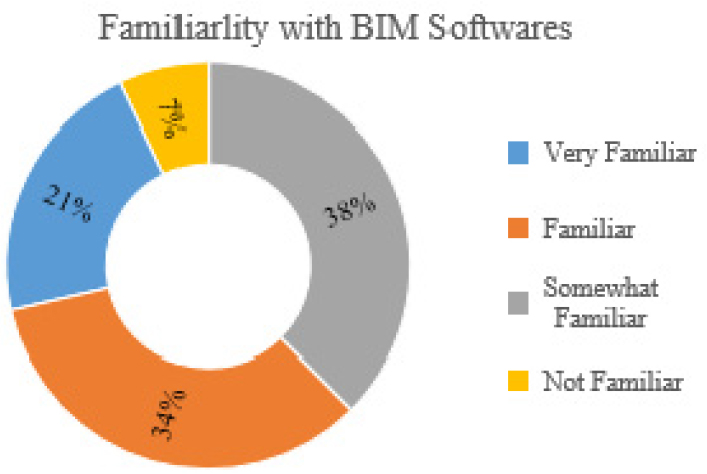
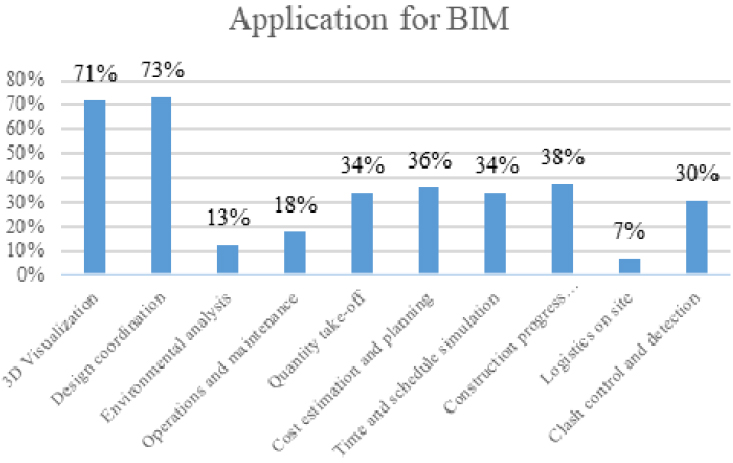
Figure 3 illustrates various applications for BIM in construction, where the percentage of uses for Design coordination is 73%, followed by 3D Visualization at 71%, Construction progress monitoring at 38%, Cost estimation and planning at 36%, Quantity take-off and Time and schedule management at 34%, Clash control, and detection at 30%. The analysis results reveal that BIM practice has been most commonly applied to increase design precision, foster interdisciplinary collaboration, and create explicit project design accounts. On the other hand, there is minimal use of BIM in construction management activities.
The respondents were asked whether BIM implementation facilitates the process of the construction industry; 84% of them answered "Yes", and 16% of them answered "Maybe" as shown in Figure 4. The findings revealed that most respondents were informative about benefits of BIM in Myanmar construction industry.
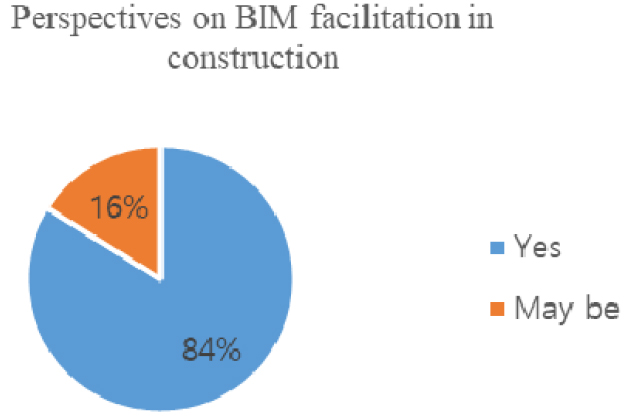
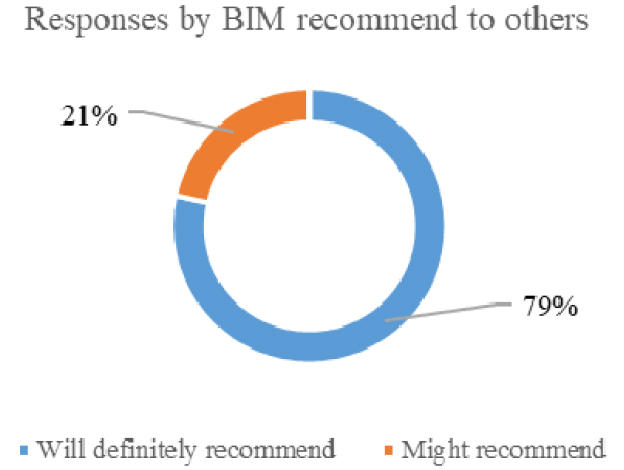
Figure 5 displays the breakdown of responses to the likelihood of recommending BIM to others. The highly willing respondents to recommend BIM to others accounted for 79% of the respondents, showing confidence in the positive influence of the technology on the results of the projects. Interestingly, one-fifth of the respondents (21%) would be reticent to recommend BIM, which may indicate ongoing challenges in BIM, at least among some users.
5.3 Statistical Validation of Barriers and Strategies Rankings
In Table 4 and Table 5, both the t-test and Mann-Whitney U test confirm the statistical significance of the RII-based rankings.
Table 4.
Independent Samples t-Test results for barriers and strategies
| Group |
Mean (Top 5) |
Mean (Bottom 5) | t-value | p-value |
| Barriers | 73.71 | 60.07 | 7.21 | 0.0013 |
| Strategies | 79.63 | 72..72 | 4.98 | 0.0034 |
Table 5.
Mann-Whitney U test results for barriers and strategies
| Group | U-value | p-value |
| Barriers | 25.0 | 0.0119 |
| Strategies | 0.0 | 0.0070 |
To determine whether the difference in Relative Importance Index (RII) values between the most and least critical barriers was statistically significant, two separate tests were performed in IBM SPSS Statistics. The five highest-ranked and five lowest-ranked sub-barriers based on RII scores were selected for comparison. An independent samples t-test showed that the highest-ranked barriers had significantly higher RII values than the least-highest-ranked barriers (t = 7.21, p = 0.0013). Additionally, the Mann-Whitney U test as shown in Table 5, a non-parametric alternative useful for ordinal data or data that cannot be assumed to be normally- distributed, also revealed a statistically significant difference (U = 25.0, p = 0.0119). These findings confirm that the observed differences in RII are not due to random variation but are statistically meaningful. Therefore, the resulting ranking of BIM adoption barriers derived from the RII method can be accepted as valid and strengthened by the statistical tests. Similarly, The five most critical strategies and the five least critical ones, based on RII scores, were compared. The independent samples t-test revealed a statistically significant difference in mean RII values (t = 4.98, p = 0.0034). Likewise, the non-parametric Mann-Whitney U test confirmed a significant difference in ranks (U = 0.0, p = 0.007). These results indicate that the top-ranked strategies are significantly more important than the lower-ranked ones, supporting the validity of the RII-based ranking.
5.4 Ranking Barriers and Strategies of BIM Implementation
The values relative importance index (RII) was calculated for each item to determine their ranking position. Table 6 and Table 7 present the calculated means, standard deviations, and resultant rankings for all the items.
Table 6.
Barriers to the adoption of BIM in the Myanmar construction industry
Table 6 shows the ranking of each barrier category and the overall ranking of 28 barriers to BIM implementation in Myanmar’s construction industry. Among the human resource barriers category, inadequate BIM project experience, lack of BIM awareness and understanding, and lack of vision of BIM benefits are the top three ranked barriers to BIM implementation with RII values of 72.86, 72.79, and 68.57, respectively. In the technical barriers category: interoperability issues between different software programs, inaccessibility to suitable technology and framework, and poor Internet connectivity are the top three ranked barriers with the RII values of 69.64, 68.93, and 66.79, respectively. In the legal barriers category, the top three ranked barriers to BIM implementation are inadequate government policies and legislation, absence of mandatory requirements from the government, and lack of support from the government with RII values of 73.93, 73.23, and 73.21, respectively. In the economic barriers category, the top three ranked barriers were inadequate market support and lack of suitable BIM projects, lack of client demand for BIM, and lack of client’s understanding of BIM, with RII values of 71.07, 70.71, and 70.36, respectively. In the managerial barriers category, low engagement across supply chains, lack of collaborative procurement methods, and limited involvement from professional bodies and industry clusters are the top-ranked barriers, with RII values of 68.93, 68.21, and 65.71, respectively.
In addition, the respondents identified the overall ranking of RII values of the top five barriers to BIM implementation in Myanmar's construction industry. The topmost ranked barrier is "inadequate government policies and legislation" (B.3.5) with (RII=73.93, SD=1.19). It shows an urgent need for a good governance structure to introduce and implement BIM in Myanmar's construction industry. "Absence of mandatory requirement from the government" (B.3.7) with (RII= 73.23, SD= 1.195) is the second-ranked barrier, which not only reinforces the fact for the urgency of the government in leading BIM adoption processes.
The lack of a BIM implementation requirement means that most companies are unwilling to invest in the technology and training required to adopt it. Additionally, the third rank barrier is "lack of support from the government" (B.3.3) with (RII= 73.21, SD= 1.225), so it shows that there are needs of initiatives, incentives and resources to promote and facilitate BIM implementation throughout the construction industry. Other researchers from different countries have shown that government-rated factors are among the most important barriers hindering the implementation of BIM. ((Rogers et al., 2015), Babatunde et al., 2019). In addition, the fourth rank barrier is “Inadequate BIM project experience” (B.1.6) with (RII=72.86, SD= 1.103), revealing a significant challenge in the adoption of BIM. This impediment lays emphasis on practical experience which is mostly lacking in professionals and organizations when adopting BIM into their workflows. The topic of (Chien et al., 2014) confirms that the lack of experience with BIM projects is the main factor of BIM adoption barriers in all construction phases. “Lack of BIM awareness and understanding” (B.1.4) with (RII=71.79, SD=1.125) is the fifth rank identified by the professionals. This suggests that many stakeholders in the construction industry are still lacking a comprehensive understanding of BIM and its potential benefits. Much research showed that the absence of BIM awareness is one of the most critical issues in the adoption of BIM in developing countries Mehran (2016), Hatem et al. (2018), El Hajj et al. (2021). This study findings would be helpful for construction stakeholders in planning BIM implementation in the construction industry, particularly in developing countries.
Table 7 reveals the ranking of each proposed strategy category and the overall ranking of proposed strategies to enhance BIM adoption in Myanmar's construction industry. All identified strategies for improving BIM adoption in Myanmar's construction industry are important, as evidenced by their relative importance index (RII) values exceeding 70. In the education and training strategies category, improving BIM awareness and understanding in the construction field, and providing BIM and related IT training by employers are the top-ranked strategies with RII values of 81.43, and 79.64, respectively. In the technology and infrastructure category, the top-ranked strategies are provision of appropriate technology and infrastructure and improving the complexity and integration of BIM platform with RII values of 77.50, and 73.57, respectively. In the government sector, developing BIM guidelines and government support for the use of BIM are the top-ranked strategies with RII values of 79.64, and 78.21, respectively. In cost and investment category, the top-ranked strategies are increasing investment in BIM training, and publishing policies to provide financial or legal support with RII values of 74.64, and 74.29, respectively. In the organization and support sector, outsourcing BIM experts, and removing the barriers between companies and individuals are the top-ranked strategies with RII values of 75.36, and 72.86, respectively.
Table 7.
Strategies for accelerating BIM adoption in the Myanmar construction industry
In addition, the overall top five ranked strategies are: improving BIM awareness and understanding in the construction field, developing BIM guidelines, providing BIM- related IT training by employers, offering more training time and opportunities, and government support for the use of BIM with RII values of 81.43, 79.66, 79.64, 78.21, and 78.21, respectively. These strategies indicate a strong acknowledgment and awareness of the importance of creating a multidisciplinary discourse and market interest in BIM technology, as well as a call for developing a standard orthodoxy to ensure BIM are integrated into the industry. Much needs to be done to improve awareness and understanding of BIM among all stakeholders because those involved may not fully grasp the benefits and utilities of BIM, which can delay or deter its adoption. The creation of BIM guidelines empowers a comprehensive and structured approach that can help projects to be delivered consistently across several projects to ensure that there is one standard approach by all teams. Equally, the focus on IT training for employers and the necessity of having workers’ BIM skills are important in realizing the benefits of using this technology. Investing in training will improve productivity and reduce errors during project execution. Further training time and occasions will additionally provide stakeholders with a greater chance of strengthening their know-how and being current with the most recent innovations in BIM, creating an up-to-date culture. Finally, government support can improve the adoption of BIM. The government can induce good practices for BIM implementation, which would help the construction industry move towards innovation and efficiency. These complementary strategies constitute a solid basis for driving BIM uptake in Myanmar construction to contribute further towards better project results and sustainability. For instance, Poole (2014), Isa (2015), Babatunde et al. (2021) identified improving BIM awareness and understanding, developing BIM guidelines, providing IT training by employees, and government support as the way forward for accelerating BIM adoption in developing countries.
5.5 Discussion
The results of the survey analysis reveal several key barriers that hinder BIM adoption in Myanmar’s construction sector, with the most critical barriers that includes the lack of government support and regulatory frameworks, insufficient client demand and incentives, inadequate training and education, high initial costs, lack of skilled personnel, and limited support from government. To enhance the practical value of the findings, these barriers can be directly mapped to the most relevant implementation strategies proposed by respondents.
For instance, the lack of government support and regulatory frameworks (B.3.3, B.3.4, B.3.5) can be effectively addressed by strategies such as S.3.1 (government support and development of BIM policy and implementation roadmap) and S.3.3 (formulation of national BIM mandates and institutional frameworks). These policy-level interventions aim to establish a formal structure for BIM adoption and create a stable regulatory environment. Likewise, the lack of client's understanding and demand and incentives (B.4.4, B.4.5) is closely associated with S.1.4(awareness about BIM and demonstration of BIM benefits), which can increase public and private sector awareness and build stakeholder confidence.
Additionally, the lack of training on the use of BIM (B.1.2) and the shortage of skilled personnel (B.1.3) are two interrelated barriers that can be tackled by S.1.1 (integration of BIM into academic curricula) and S.5.1 (outsourcing BIM experts). These strategies emphasize the importance of long-term investment in human capital, both in academic and professional settings. Lastly, the high initial cost of BIM software and hardware (B.4.1) can be mitigated through S.2.1 (provision of appropriate technology and infrastructrue) and S.4.1 (government policies to provide finanial support), reducing the financial burden on firms, especially small- and medium- sized enterprises.
This approach of mapping barrier-strategy strengthens the study as it helps to show how proposed solutions are directly associated with specific barrier challenges. The process and possible solutions show potential policy and practice implications, and raises awareness about the possibility of integrating their action with government, academia, and industry. By establishing these linkages, the research goes beyond identifying challenges—it provides a structured foundation for strategic intervention and future policy formulation.
6. Conclusions
This study investigated the critical barriers to adopting BIM and identified viable strategies to accelerate its implementation in Myanmar's construction industry. Conducting a well- structured questionnaire that was distributed to 56 construction professionals and relied on quantitative methodology utilizing the Relative Importance Index (RII). The study identified 28 barriers and 16 proposed strategies. The study's outcomes will make contributions to both academic discourse and policymakers practicing in an area where BIM is still in an early stage, particularly in developing countries.
Among the barriers, the five most significant were (1) inadequate government policies and legislation, (2) absence of mandatory BIM requirements, (3) lack of government incentives or support mechanisms, (4) limited BIM project experience, and (5) low awareness of BIM across the industry. These challenges, primarily centered on institutional and knowledge-based issues, reveal the structural and systemic gaps that hinder BIM adoption. The prominence of government-related barriers underscores the critical role of policy frameworks in enabling digital transformation.
The study also identified five high-priority strategies to address these barriers:(1) increasing awareness and understanding of BIM among construction stakeholders; (2) developing national BIM guidelines; (3) providing structured IT and BIM-related training supported by employers; (4) increasing the duration and accessibility of training opportunities; and (5) enhancing government involvement through policies, incentives, and financial support mechanisms. These recommendations align with international practices. For instance, countries like Singapore, South Korea, and the UK have successfully used government mandates, public funding, and standardized frameworks to drive BIM adoption.
Using the RII method enabled prioritization of barriers and strategies, yet the analysis was primarily descriptive. Future research should apply statistical significance testing and correlation or factor analysis to explore relationships among barriers, such as the interplay between government support and industry capability. Such deeper analysis would strengthen the explanatory power of the findings and enable more targeted interventions.
In terms of practical perspectives, the findings indicate that Myanmar's government should take a larger role in starting BIM pilot projects, funding SME adoption, and legally requiring BIM roadmaps, which would further expose the subject to stakeholders. Furthermore, institutions of higher education should incorporate BIM modules into architecture and engineering curricula to foster a more informed future workforce. Establishing standardized BIM protocols within the context of Myanmar's industry maturity and market size will help eliminate confusion and develop trust among industry actors. This study recommends several directions for future research:
1. The development of phased BIM implementation plans tailored to the capacity of local firms and the maturity of the construction industry.
2. The execution of pilot BIM projects to enhance stakeholder confidence and generate practical, context- specific feedback.
3. Long-term assessments of cost-benefit and return on investment (ROI) to economically justify BIM adoption and provide evidence-based support for implementation.
In order to realize the full benefits of BIM in Myanmar, the government, academia, and industry must work together purposefully and consistently. By continuing to devote time and resources into policy development, capacity building, and raising awareness, the construction sector of Myanmar will be able to catch-up with the digital transformation happening globally, which will then allow them to deliver better coordinated, sustainable, and efficient buildings and infrastructure.
The limitations of this study should also be acknowledged. The sample size of 56 respondents may not capture the breadth of respondents' perspectives throughout Myanmar's construction sector, and as such, although the findings have some significance, it may not be widely generalizable. Nonetheless, the study provides valuable insights into BIM adoption challenges and offers practical strategies to support BIM implementation in developing contexts. It is intended as a foundational guide for professionals, policymakers, and stakeholders seeking to foster a more innovative, efficient, and digitally integrated construction industry in Myanmar.